Can Empathy protect Against Burnout? Accounts of Work-Related Distress during Compound Disasters in Puerto Rico
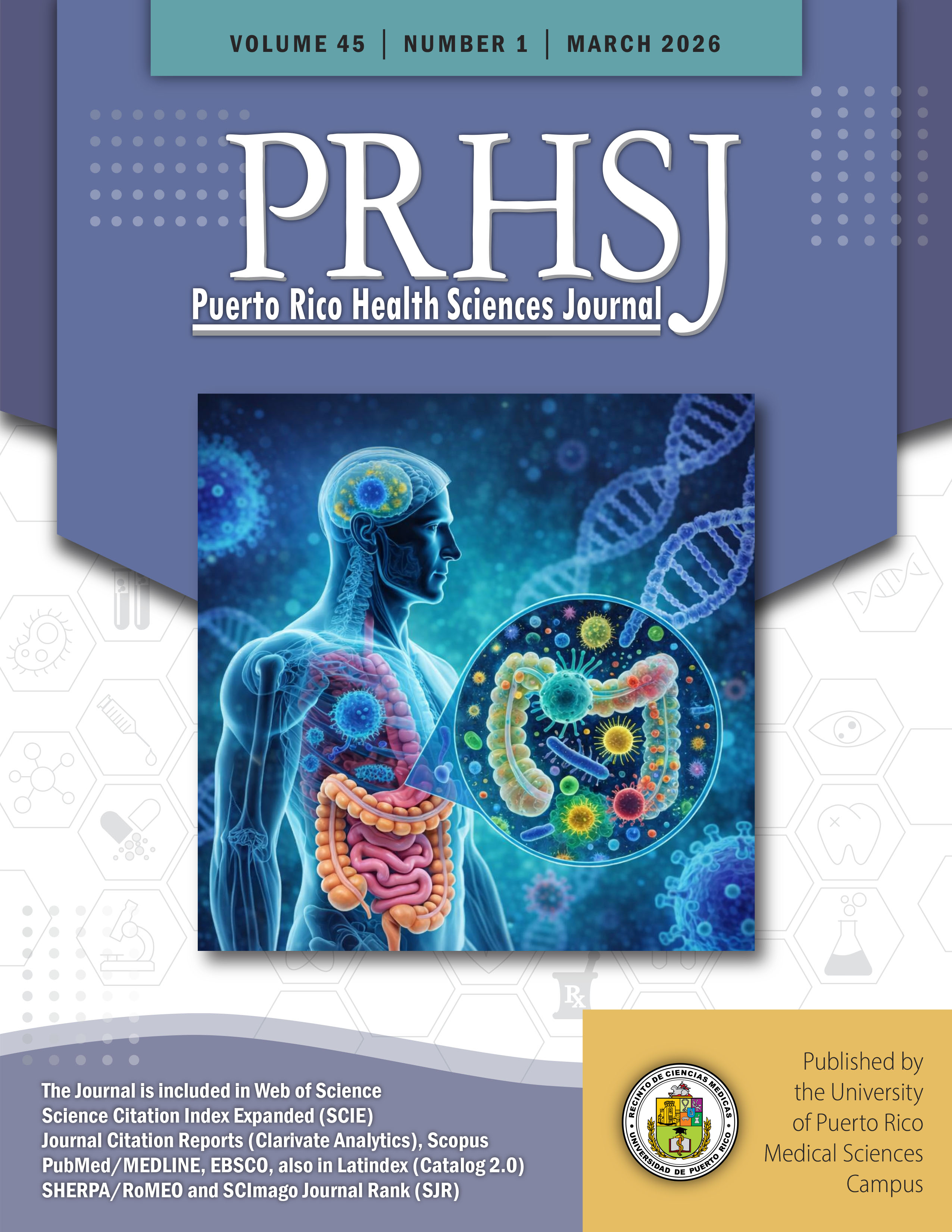
The image on cover of the PRHSJ was generated and edited using artificial intelligence (AI) -Grok, Gemini, and Copilot- to conceptually illustrate a topic discussed in one of the publications about Microbiome. This image does not represent a real subject.
PDF

Keywords

Burnout
Moral injury
Puerto Rico
Compound disasters
Healthcare workers
Workforce

How to Cite

Mulligan, J. M., Sanabria-León, W., Simal, M., Sprong, A., Umanzor, A., & Rodriguez, H. (2026). Can Empathy protect Against Burnout? Accounts of Work-Related Distress during Compound Disasters in Puerto Rico. Puerto Rico Health Sciences Journal, 45(1), 28–33. Retrieved from https://prhsj.rcm.upr.edu/index.php/prhsj/article/view/3523

Abstract

Objective: To identify how healthcare workers experienced work related distress during compound disasters in Puerto Rico. Methods: Over three weeks, a research team composed of ten undergraduate students and three faculty visited eight healthcare sites in Puerto Rico. The team utilized rapid qualitative methods by conducting observations, informal interviews, and two focus groups. Data were documented in notes and analyzed via a shared RREAL table, where the team collaboratively organized, recategorized, and reviewed the findings. Results: Participants reported symptoms such as physical tiredness, emotional exhaustion and frustration. High levels of compassion were also present. Researchers apply the concepts of burnout and moral injury to understand how eroding conditions and prolonged disasters produce these emotional conflicts. Moral distress arose when professionals could not meet patients’ needs due to a lack of providers, limited resources, and a fragmented healthcare system. Additionally, health care workers experienced conflicts between their work and family roles. We argue that strong connections to their communities and patients foster resilience in healthcare workers and protect against the full range of burnout symptoms. However, these strong community connections can also give rise to moral injury. Conclusions: Burnout and moral injury coexist in healthcare professionals when they cannot provide the best patient care due to obstacles created by prolonged compound disasters and a broken healthcare system.

PDF
Authors who publish with this journal agree to the following terms: a. Authors retain copyright and grant the journal right of first publication with the work simultaneously licensed under a Creative Commons Attribution License that allows others to share the work with an acknowledgement of the work's authorship and initial publication in this journal. b. Authors are able to enter into separate, additional contractual arrangements for the non-exclusive distribution of the journal's published version of the work (e.g., post it to an institutional repository or publish it in a book), with an acknowledgement of its initial publication in this journal. c. Authors are permitted and encouraged to post their work online (e.g., in institutional repositories or on their website) prior to and during the submission process, as it can lead to productive exchanges, as well as earlier and greater citation of published work (See The Effect of Open Access).