Keywords
Dengue
Puerto Rico
Mosquito surveillance
Arboviruses
How to Cite
Abstract
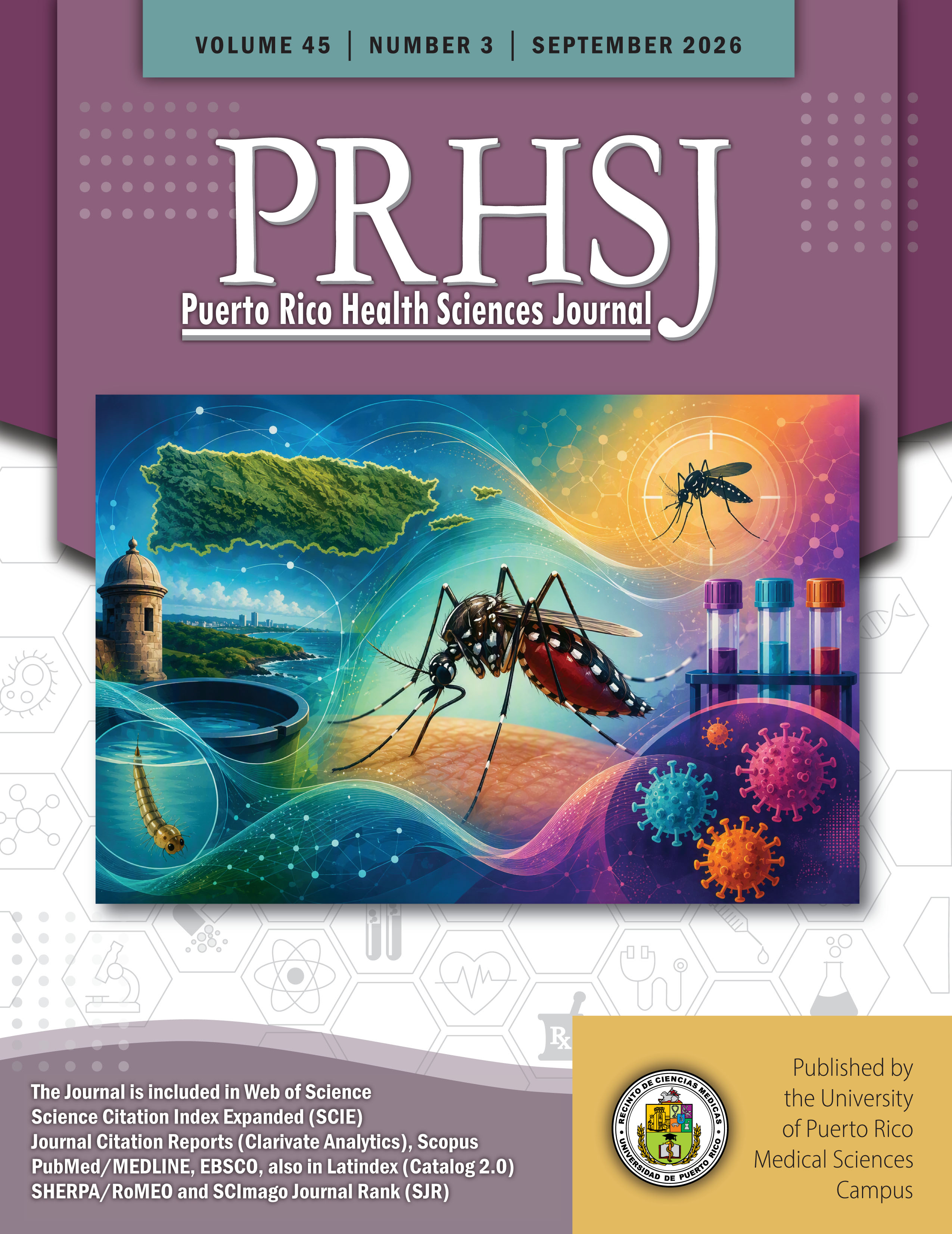
Dengue has long been a major public health problem in Puerto Rico, and the emergence of chikungunya and Zika has added to this burden. These arthropod-borne viruses are transmitted primarily by the domestic mosquito Aedes aegypti. This review synthesizes peer-reviewed studies published from 1974 through 2024 on Ae. aegypti biology, ecology, and surveillance that were conducted in Puerto Rico or that used mosquitoes collected in Puerto Rico. References were identified through PubMed and Google Scholar and supplemented by the author’s curated collection. Collectively, the literature shows that persistence of Ae. aegypti in Puerto Rico is supported by desiccation-resistant eggs, the use of a broad range of natural and artificial containers, and year-round access to aquatic habitats maintained by both rainfall and human activity. The reviewed studies also indicate that mosquito production is spatially heterogeneous, with a small number of container types and cryptic habitats often contributing disproportionately to adult emergence. Surveillance tools for eggs, immature stages, and adults are available, but each is best suited to specific operational objectives, including identifying productive containers, monitoring adult abundance, detecting arboviruses, and evaluating control interventions. Important knowledge gaps remain regarding egg viability under field conditions, the contribution of overlooked aquatic habitats, the role of Aedes mediovittatus and other potential vectors, seasonal variation in adult survival; and the influence of socioeconomic factors, spatial structure, and other determinants on mosquito abundance and arbovirus transmission. Addressing these gaps through operationally relevant research could improve prevention and control strategies for dengue and other arboviruses in Puerto Rico.